When people shop for pearls, they usually ask about color, size, or luster.
But there’s another feature that makes a huge difference in both value and vibe:Shape.
Whether a pearl looks classic, artistic, elegant, or playful depends heavily on its shape.
So today, let’s walk through the most common pearl shapes explained in a simple, friendly way with real-world examples.
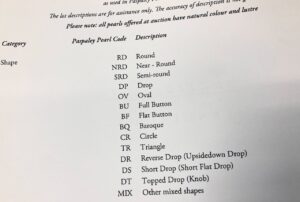
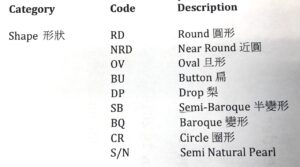
This guide is based on classifications used in professional pearl auctions,
but rewritten in an easy, everyday format.
Why Pearl Shape Matters (More Than You Think)
Pearl shape affects:
- How expensive it is
- How fancy it looks
- Whether you can find matching earrings (which is a whole adventure)
- The vibe it gives when worn
- And yes… how the pearl rolls on a table
Sometimes the “not-so-round” pearls end up being the most charming.
1) Baroque Pearls
The artsy, free-spirited rebels of the pearl world
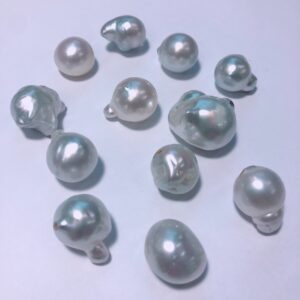
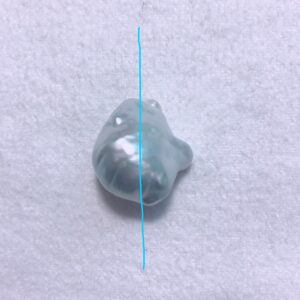
Baroque pearls have irregular, asymmetrical shapes.
If you draw an imaginary line down the middle and the two sides don’t match?
Congratulations that’s a baroque.
Why Americans love them:
- Unique, sculptural shapes
- Bold personality
- Perfect for modern and artistic jewelry
- No two are the same (seriously)
2) Circle-Baroque / Circled Pearls
Pearls wearing natural “rings” like tiny belts
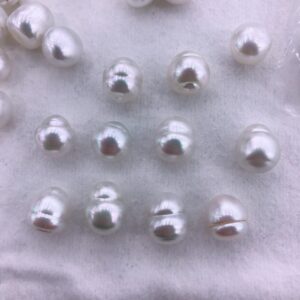
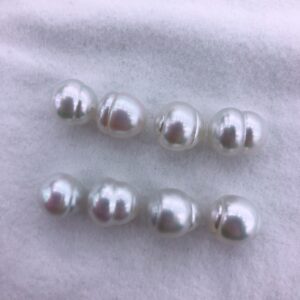
These pearls have circles or grooves wrapped around their bodies.
They’re usually budget-friendly,
but when you string them into a long necklace?
Instant fashion-icon energy.
Think “laid-back elegance with character.”
3) Drop Pearls
Elegant teardrops earrings love them
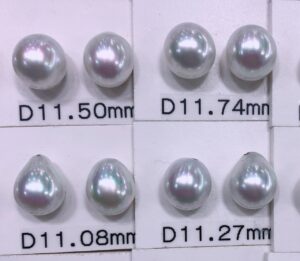
Drop pearls are shaped like tiny droplets.
They’re classic, graceful, and very popular for dangle earrings.
The only issue?
Finding two drop pearls that look like twins = pearl matchmaking Olympics.
When matched well, they can be more special (and sometimes pricier) than rounds.
4) Oval Pearls
Smooth, neat, and quietly beautiful
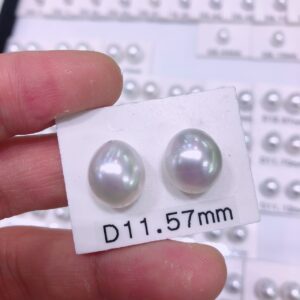
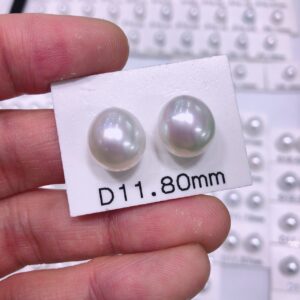
Oval pearls are symmetrical and slightly elongated.
They’re versatile for both pendants and earrings.
Not as celebrated as drops, but definitely underrated.
5) Button Pearls
Cute little “mochi bun” pearls with a flat side
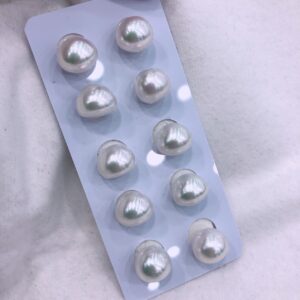
Button pearls are rounded on top and flatter on the backside
which makes them perfect for stud earrings and rings.
Fun fact:
In professional pearl auctions, high-grade button pearls can rival round pearls in price.
In everyday retail? They’re often overlooked.
(Their loss, your win.)
6) Near-Round & Semi-Round Pearls
Almost round but a little too honest to fake it
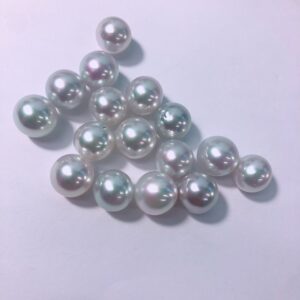
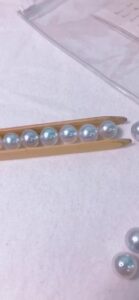
These pearls look round until you roll them.
Then you’ll notice a tiny wobble.
Many customers describe them as:
“Not perfectly round, but super clean and shiny.”
And honestly?
That’s exactly what they are and they’re fantastic for earrings.n
7) Round Pearls
The classic pearls everyone thinks of first

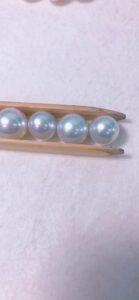
Perfectly round pearls roll smoothly in every direction.
They’re the hardest to cultivate, the most traditional,
and generally the most valuable.
Round pearls = timeless elegance.
Which Shape Is “Best”?
Well… it depends.
The traditional ranking goes:
Round > Near-Round > Semi-Round > Button > Drop/Oval > Baroque > Circle-Baroque
But shape isn’t everything.
Pearl value also depends on:
- Luster
- Surface quality
- Color
- Size
- Matching difficulty
This is why sometimes:
A stunning baroque or drop pearl can cost more than a perfectly round one.
Beauty comes in many shapes literally.
- 📍 Location: 24, Donhwamun-ro 8-gil, Jongno-gu, Seoul, Republic of Korea (Store visits welcome!)
- 💬KakaoTalk: hibird1/ 010-5279-7103
- 📸 Instagram: @hibird1